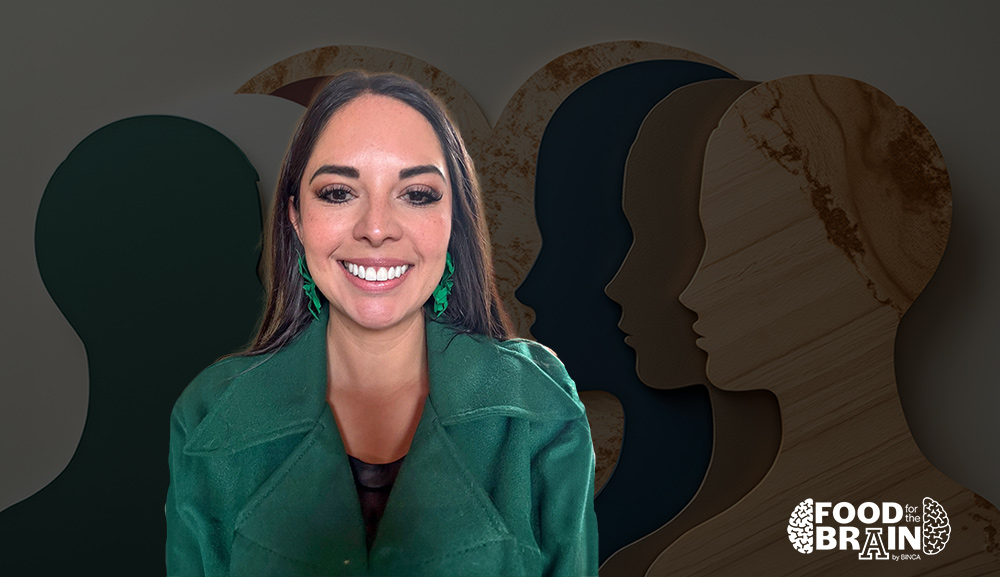
Patricia Hernández addressed empathy as a fundamental therapeutic tool in clinical practice, highlighting its role in physician–patient communication, as well as the risks of emotional overload when appropriate boundaries are not established.
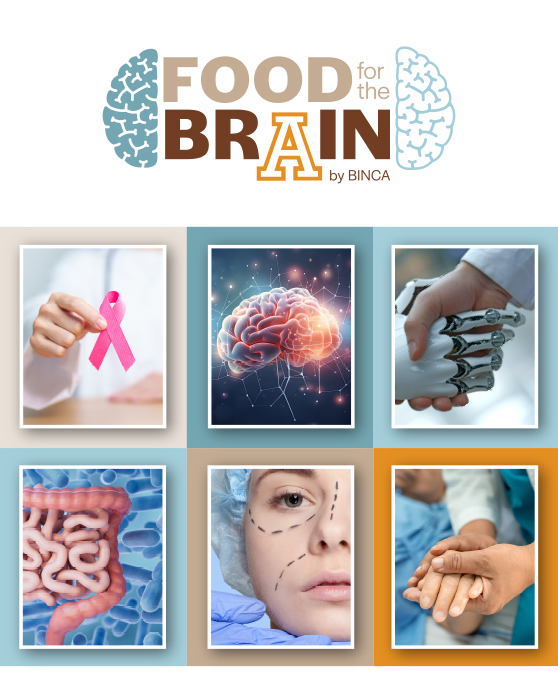
Within the framework of BINCA’s academic activities, in our second monthly edition of Food for the Brain, a session was held focusing on the relationship between empathy and clinical practice, exploring its therapeutic potential, its bioethical implications, and the emotional challenges inherent to its daily exercise.
During the session, empathy was defined as a cognitive and behavioral skill that enables a deep understanding of the patient’s emotional state, while maintaining clarity, objectivity, and sound clinical judgment. Beyond compassion, empathy was presented as a key element for effective communication and the development of a strong therapeutic relationship.
In contrast, the concept of ecpathy was introduced, referring to a state in which the professional not only understands but also absorbs the patient’s emotional suffering. Although subtle in appearance, this distinction is essential: while empathy involves accompanying the patient with awareness and clear boundaries, ecpathy entails an emotional overload that blurs the therapeutic distance.
From this perspective, healthy empathy is characterized by balance, emotional clarity, and presence, allowing the professional to listen, interpret, and respond without losing their own center. Conversely, ecpathy is associated with exhaustion, loss of boundaries, and impaired clinical decision-making, manifesting in phenomena such as clouded judgment or the inability to disconnect.
It was emphasized that empathy is not merely an emotional disposition, but a therapeutic tool that can be developed, expressed through accompaniment, active listening, and appropriate interpretation of the patient’s discourse, provided that the professional has the necessary training.
The session also addressed fundamental phenomena in the clinical relationship, such as paternalism, transference, and countertransference, underscoring the importance of recognizing them to avoid distortions in care and to maintain ethical professional practice. One of the central points of the discussion was the need to establish clear boundaries as a mechanism of emotional self-protection, understood not as a barrier, but as a necessary condition to sustain genuine and long-term empathy.
In this regard, it was highlighted that well-exercised empathy not only protects the professional, but also leads to improved clinical outcomes, reduced emotional exhaustion, and a more humane medical practice, consolidating the clinical encounter as a responsible, solidaristic, and deeply humanizing act.
Finally, the question-and-answer session fostered an enriching exchange, in which concrete examples and real-life situations were discussed, allowing for a more grounded understanding of the concepts presented. The active participation of attendees encouraged a profound reflection on the application of empathy and its limits, not only in daily clinical practice, but also in the education and comprehensive training of healthcare professionals, emphasizing the need to incorporate these competencies from the early stages of academic and professional development.
BINCA
More information:
Bioética Clínica y Neuroética Anáhuac (BINCA)
Dra. María Fernanda Martínez Palomo
neuroetica@anahuac.mx