
Experts reflected on the bioethical challenges of occupational health surveillance, personal data protection, and respect for workers’ dignity and autonomy.
The Anáhuac Center for Strategic Development in Bioethics (CADEBI) participated in the International Congress on Labor Bioethics, Social Justice, and Mexican Humanism, held on November 5–6, 2026, and organized by the Ministry of Economic Development of the Government of the State of Puebla, Mexico. This academic gathering brought together specialists from various disciplines to reflect on contemporary challenges in labor relations, social justice, human rights, and the integration of emerging technologies into workplace environments.
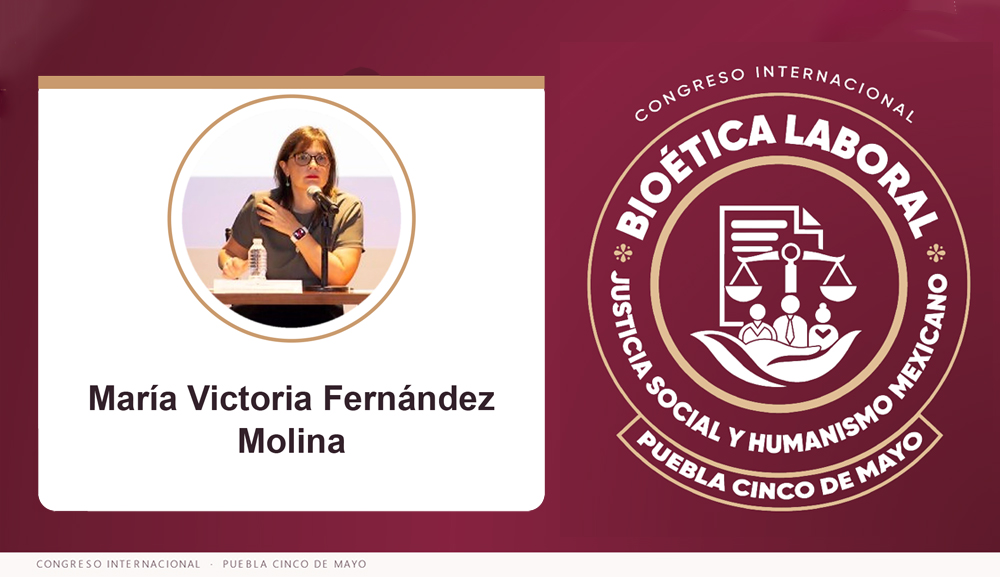
CADEBI participated on November 5 in the panel “Body, Mind, and Data: Bioethical Dilemmas in Occupational Health Surveillance and Protection,” coordinated and moderated by Alejandro Sánchez Guerrero, with María Victoria Fernández Molina, a researcher at the Inter-American Academy of Human Rights of the Autonomous University of Coahuila and a collaborator of the Anáhuac Center for Strategic Development in Bioethics, serving as a panelist.
The panel also featured Rolando Javier Salinas García, a professor and researcher at the Autonomous University of Querétaro and Director of the UAQ Labor Center, and María Leticia Cervantes Hernández, an academic at the Meritorious Autonomous University of Puebla specializing in gender studies, mediation, and domestic violence.
The session was part of the thematic track “Labor Bioethics, Health, and Comprehensive Well-Being” and provided an opportunity to examine, from interdisciplinary perspectives, the ethical tensions that arise when tools designed to protect workers’ physical and mental health may also become instruments of surveillance, control, or discrimination.
Balancing Health Protection and Respect for Autonomy
One of the central issues raised during the panel was the need to distinguish between occupational health surveillance conducted for preventive purposes and practices that may compromise workers’ fundamental rights.
In this context, the discussion addressed challenges associated with the use of smart devices, fatigue sensors, biometric monitoring systems, and artificial intelligence tools. Although these technologies can help identify risks and prevent accidents, they also raise questions regarding privacy, consent, the proportionality of surveillance measures, and the limits of employer intervention in workers’ bodies and personal lives.
The panel also examined the importance of ensuring that corporate wellness initiatives do not replace employers’ institutional responsibility to guarantee safe and healthy working conditions. Drawing on international guidelines on mental health at work and the Mexican regulatory framework, particularly NOM-035, the discussion emphasized the need to address organizational factors that generate psychosocial risks rather than placing responsibility for managing stress and its consequences exclusively on individual workers.
Artificial Intelligence, Sensitive Data, and Human Rights
María Victoria Fernández Molina’s participation focused on the bioethical and legal dilemmas surrounding the protection of sensitive personal data, the digitalization of occupational health, and the use of automated systems in human resource management.
Among the issues raised was the risk that medical records, psychological assessments, and other information related to physical and mental health could be used to create employee profiles, introduce discriminatory biases, or support decisions affecting workers’ job security and professional opportunities.
The discussion incorporated references to international regulatory instruments, including the European Union’s General Data Protection Regulation (GDPR) and Artificial Intelligence Act (AI Act), as well as Convention No. 161 of the International Labour Organization (ILO), to reflect on the need to strengthen safeguards for confidentiality, transparency, and the protection of workers’ rights.
Questions were also raised regarding the international transfer of medical information, the storage of data on servers located outside national borders, and the ethical responsibilities of organizations that use technological platforms to manage sensitive information.
From a bioethical perspective, these issues highlighted the importance of establishing clear boundaries between organizations’ obligations to protect workers’ health and the need to respect their bodily autonomy, mental autonomy, and informational self-determination.
Toward a Workplace Culture Centered on Human Dignity
The interdisciplinary discussion also situated these challenges within the broader framework of labor rights, social justice, and international standards for decent work.
Topics included the limits of employers’ managerial authority, the protection of mental privacy in light of emerging cognitive monitoring technologies, and the need to promote occupational health models that prioritize prevention, comprehensive well-being, and respect for human rights.
These considerations underscore that technological innovation in workplace environments must be accompanied by ethical principles and appropriate governance mechanisms. The ability to collect and analyze information about workers does not, in itself, mean that every form of monitoring is necessary, proportionate, or morally justified.
In this regard, bioethics provides a framework for reconciling occupational risk prevention with the protection of privacy, autonomy, equity, and human dignity.
CADEBI’s Commitment to Applying Bioethics to Contemporary Challenges
CADEBI’s participation in this congress reaffirms its commitment to promoting interdisciplinary academic dialogue and bioethical reflection on the challenges arising from social, scientific, and technological transformations.
Through forums such as this, the Center contributes to expanding bioethical discussions into areas such as labor relations, occupational health, personal data protection, and artificial intelligence governance, where aligning technological advances with the protection of human rights is essential.
Placing people at the center of labor relations means recognizing that protecting workers’ health must not come at the expense of their privacy, autonomy, or dignity. This principle provides essential guidance for advancing toward fairer, safer, and more ethically responsible working environments.
More information:
Centro Anáhuac de Desarrollo Estratégico en Bioética (CADEBI)
Dr. Alejandro Sánchez Guerrero
alejandro.sanchezg@anahuac.mx