December 15, 2025
Author: José Emilio Figueroa Gutiérrez
Versión en español
Introduction
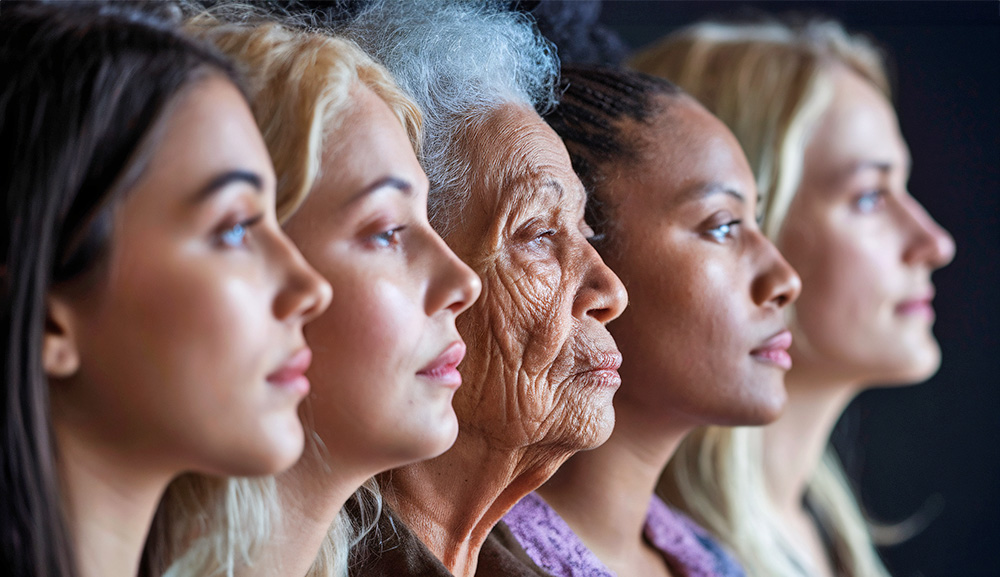
In Mexico, population aging is advancing rapidly: today, older adults represent 12.8% of the population and will make up nearly one-fifth by 2040.¹ This scenario forces us to ask how to ensure an autonomous and dignified old age, especially when degenerative conditions—such as knee and hip osteoarthritis which limit functional independence.
Development
Demographic Transformation and Functional Autonomy
Population aging in Mexico is the result of a combination of factors: a sustained decline in fertility, reduced mortality, and increased life expectancy, which in 2024 once again reached approximately 75.5 years.² This change is not merely a statistical phenomenon, but a profound transformation of the social structure that requires rethinking the organization of health systems, care models, and, above all, the way we conceive of old age.
Unlike what occurred in many high-income countries, where this process unfolded over nearly a century, Mexico’s transition toward an aging society is taking place over just a few decades.³ This speed leaves little room for a gradual adaptation of public policies, urban infrastructure, social protection systems, and families, which continue to be the main providers of long-term care.
Projections indicate that by 2030 there will be more older adults than young people, and that by 2070 approximately one third of the population will be aged 60 or older.¹ This figure is not merely numerical: it represents millions of life stories reaching advanced ages with specific needs for support, care, and social recognition. However, these needs are not distributed evenly across the country.
Territorial Inequalities and Contexts of Aging
In 2024, most Mexican states were already in moderate or advanced stages of demographic aging, with particular intensity in Mexico City, the State of Mexico, Veracruz, and Morelos.² At the same time, rural or marginalized areas persist where health and rehabilitation services are scarce and formal support systems are virtually nonexistent.
This territorial and socioeconomic heterogeneity has direct ethical implications. Aging with osteoarthritis in an urban neighborhood with access to public transportation, health centers, and safe spaces for walking is not the same as aging in a rural community where distances are long, pavement is uneven, and specialized services are nearly unreachable. From the perspective of distributive justice, these differences force us to ask who can truly exercise autonomy and who sees this possibility restricted by structural conditions.⁵
Bioethics cannot be limited to the physician–patient relationship in the clinic; it must incorporate this social dimension. The growing proportion of older adults demands policies that promote accessible environments, community-based exercise programs, and support networks that allow independence to be maintained for as long as possible. Otherwise, population aging will translate into a massive increase in functional dependence and an unequal burden on already vulnerable families.¹,⁵
Osteoarthritis of the Lower Limbs and Vulnerability of Autonomy
In this context, knee and hip osteoarthritis occupies a central place. Globally, it is one of the leading causes of chronic pain and disability in older adults, with particularly high prevalence in the knee joint.⁸ Most affected individuals are over 55 years of age, and a significant proportion are women, reflecting gender patterns in labor, caregiving, and access to health services.⁸
Although osteoarthritis often appears in clinical records as just another diagnosis, for those who experience it, it represents a turning point in everyday life. Persistent pain when walking, difficulty rising from a chair, or fear of falling when climbing stairs transform simple tasks into obstacles that require planning, assistance, or renunciation.⁶ When these limitations accumulate, older adults begin to avoid activities that were once meaningful: visiting friends, participating in community groups, going to the market, or accompanying family members.
In cases of severe hip osteoarthritis, it has been documented that individuals with greater functional dependence also experience higher levels of pain and reduced ability to perform basic activities of daily living, such as bathing, dressing, or moving around the home.⁷ Thus, a cycle of deterioration emerges in which pain leads to reduced movement, resulting in loss of strength, increased stiffness, and ultimately more pain and greater dependence.
Psychosocial Impact and Sense of Identity
The consequences of this process are not solely physical. Numerous studies have shown that loss of autonomy is associated with increased risk of depression, anxiety, social withdrawal, and reduced quality of life.¹⁶–¹⁸ Older adults who previously perceived themselves as caregivers, providers, or family reference figures may begin to see themselves as a “burden,” profoundly affecting their self-esteem and sense of usefulness.¹⁹
Functional dependence also reshapes family relationships: in some cases it strengthens solidarity and reciprocal care; in others, it generates tension, overload, and even abandonment.¹⁷,²⁰ For many older adults, requiring assistance with intimate activities—such as personal hygiene or using the bathroom—can be experienced as humiliating or as a loss of privacy. The impact is not merely practical, but existential: they feel deprived of control over their own bodies and time.¹⁹,²¹
From a bioethical perspective, these experiences remind us that autonomy is not limited to the capacity to sign an informed consent. It implies the ability to decide about one’s daily life: when to get up, where to go, with whom to interact, and which activities to pursue. When lower-limb osteoarthritis limits mobility, it also restricts these decisions and therefore directly affects dignity.²² An adequate ethical response must acknowledge this depth and avoid viewing osteoarthritis solely as a “wear-and-tear disease.”
Person-Centered Conservative Management
In light of this reality, conservative management of knee and hip osteoarthritis acquires a clearly bioethical dimension. Far from being a secondary option to surgery, it constitutes a primary strategy to preserve functional autonomy and delay progression toward dependence.⁹–¹¹ Evidence indicates that therapeutic exercise programs can reduce pain, improve muscle strength, and increase walking capacity in older adults, even when established joint damage is present.¹¹–¹³
The most recommended approach is multicomponent exercise, integrating moderate aerobic activity, lower-limb strengthening, flexibility work, balance training, and gait practice.¹¹,¹³ This combination not only improves joint function, but also reduces fall risk and enhances confidence while walking. The key lies in adapting intensity and frequency to each individual’s capabilities, with realistic and progressive goals.¹¹
Physiotherapy plays an essential role in this process.¹²,¹⁵ The physiotherapist assesses strength, mobility, stability, and gait patterns; designs an individualized exercise program; and teaches strategies to perform daily activities with the least possible pain. Additionally, they recommend and adjust assistive devices—canes, walkers, insoles, braces, or specialized footwear—that expand the older adult’s range of action. From a clinical ethics standpoint, this individualization expresses respect for each patient’s uniqueness.¹⁵
Lifestyle, Environment, and Justice in Health
Weight management is another important component, as obesity increases load on the knee and hip joints and is associated with a higher risk of developing osteoarthritis or accelerating its progression.¹⁴ However, promoting changes in diet and physical activity cannot be done through a blame-centered discourse that places exclusive responsibility on the individual. In many cases, older adults live in contexts with limited access to healthy foods, unsafe spaces for walking, or insufficient income to afford specialized therapies.
Public health bioethics reminds us that individual decisions are shaped by these social determinants. Therefore, lifestyle interventions must be accompanied by policies that improve access to rehabilitation services, create community exercise programs, and foster more age-friendly urban environments.⁵ Only then can calls for self-care be made without ignoring the structural inequalities that limit older adults’ real options.
Education, Empowerment, and Long-Term Adherence
Therapeutic education occupies a strategic place in the non-pharmacological treatment of osteoarthritis.¹⁵ Informing patients about the disease, explaining the origin of pain, clarifying realistic expectations for improvement, and teaching self-care techniques are essential steps so that older adults can actively participate in decisions about their treatment.
When education is combined with exercise programs and psychosocial support, improvements are observed in functional capacity and in the perception of control over one’s own life.¹³,²¹. This increased sense of control is itself a form of empowerment. From a bioethical perspective, strengthening this agency is fundamental to sustaining autonomy in contexts of physical fragility.
Nevertheless, one of the greatest challenges is long-term adherence. Even when they understand the benefits of exercise, many older adults abandon programs due to pain, lack of accompaniment, economic barriers, or absence of appropriate spaces.⁷,⁹ Responsibility for this low adherence cannot be attributed solely to the individual; it must be understood as a shared problem among health systems, families, and communities. Designing feasible, accessible, and culturally appropriate interventions is a duty of justice and respect for the dignity of those aging with osteoarthritis.²²
Conclusions
Mexico’s demographic aging brings to the forefront a central bioethical question: what does it mean to care well for older adults when living longer does not always mean living better? Knee and hip osteoarthritis starkly illustrate how a common condition can undermine functional autonomy, identity, and social participation if it is addressed solely as an orthopedic problem.
Placing autonomy at the center means assuming that the goal of the health system is not merely to control pain or reduce surgical waiting lists, but to sustain older adults’ capacity to decide, move, relate, and continue fulfilling meaningful roles. Therapeutic exercise programs, physiotherapy, weight management, environmental adaptation, and assistive technology are clinical tools, but also ethical resources aimed at preserving dignity and preventing social isolation and emotional decline.
From this perspective, conservative management ceases to be a “second option” to surgery and becomes a priority public health strategy. Its success depends on being accessible, affordable, and culturally appropriate, and on systematically incorporating the voices of older adults into decision-making. Respect for autonomy is not limited to obtaining informed consent, but to building shared, realistic, and sustainable care plans that recognize limits and possibilities in each life story.
References
- Instituto Nacional de las Personas Adultas Mayores. (2025). Proyecciones demográficas de un México que envejece. Gobierno de México. https://www.gob.mx/inapam/articulos/proyecciones-demograficas-de-un-mexico-que-envejece
- Consejo Nacional de Población. (2024). La situación demográfica de México 2024. https://www.gob.mx/conapo/documentos/la-situacion-demografica-de-mexico-2024
- Consejo Nacional de Población. (2024). Del acelerado envejecimiento poblacional. https://www.gob.mx/conapo/articulos/del-acelerado-envejecimiento-poblacional
- Scielo México. (2005). La transición demográfica y el proceso de envejecimiento en México. https://www.scielo.org.mx/scielo.php?script=sci_arttext&pid=S1405-74252005000300002
- Organización Panamericana de la Salud. (2024). Oportunidades para un envejecimiento saludable en México. https://www.paho.org/es/noticias/27-5-2024-oportunidades-para-envejecimiento-saludable-mexico
- Cuideo. (2025). Artrosis en personas mayores: todo lo que necesitas saber. https://cuideo.com/blog/artrosis-personas-mayores/
- Gajardo-Burgos, R., et al. (2022). Asociación entre la dependencia funcional, capacidad funcional y dolor, en personas mayores con artrosis severa de cadera. Fisioterapia, 44(1), 11-17. https://www.elsevier.es/es-revista-fisioterapia-146-articulo-asociacion-entre-dependencia-funcional-capacidad-S0211563821000857
- Organización Mundial de la Salud. (2023). Artrosis. https://www.who.int/es/news-room/fact-sheets/detail/osteoarthritis
- Scielo Chile. (2022). Efectos en la capacidad funcional de un programa de ejercicio físico terapéutico basado en telesalud en personas con diagnóstico de osteoartritis de rodilla y cadera. https://www.scielo.cl/scielo.php?script=sci_arttext&pid=S0034-98872022000100033
- Fundación CASER. (2024). ¿Qué es la artrosis? Síntomas y tratamiento. https://www.fundacioncaser.org/discapacidad/tipos-de-discapacidad/discapacidad-fisica/artrosis
- Elsevier. (2014). Artrosis y ejercicio físico. Revista Médica Clínica Las Condes, 25(5), 805-826. https://www.elsevier.es/es-revista-revista-medica-clinica-las-condes-202-articulo-artrosis-ejercicio-fisico-S0716864014701117
- Vital&Clinic. (2019). La fisioterapia y ejercicio terapéutico ante la artrosis. https://vitalclinic.es/fisioterapia-protesis-artrosis/
- Scielo Bolivia. (2024). Ejercicio terapéutico en la disminución del dolor en pacientes con artrosis de rodilla grado 1: revisión sistemática. http://www.scielo.org.bo/scielo.php?script=sci_arttext&pid=S2664-32432024000100207
- Evidencia. (2021). Tratamiento conservador de la artrosis de cadera. https://www.evidencia.org/index.php/Evidencia/article/view/6937
- Scielo España. (2005). Guía de manejo clínico de la artrosis de cadera y rodilla. https://scielo.isciii.es/scielo.php?script=sci_arttext&pid=S1134-80462005000500006
- Scielo España. (2014). Dependencia funcional y bienestar en personas mayores institucionalizadas. https://scielo.isciii.es/scielo.php?script=sci_arttext&pid=S1132-12962014000100008
- Scielo España. (2019). Nivel de dependencia funcional de personas mayores institucionalizadas en centros de bienestar. https://scielo.isciii.es/scielo.php?script=sci_arttext&pid=S1134-928X2019000400163
- Scielo México. (2016). Nivel de dependencia, autocuidado y calidad de vida del adulto mayor. https://www.scielo.org.mx/scielo.php?script=sci_arttext&pid=S1665-70632016000300159
- Scielo México. (2018). Dejar de ser o hacer: significado de dependencia funcional para el adulto mayor. https://www.scielo.org.mx/scielo.php?script=sci_arttext&pid=S0188-62662018000300040
- Dialnet. (2022). Depresión y dependencia funcional en los adultos mayores del centro geriátrico "Futuro Social". https://dialnet.unirioja.es/descarga/articulo/8635253.pdf
- Pepsic. (2008). Integración social y habilidades funcionales en adultos mayores. https://pepsic.bvsalud.org/scielo.php?script=sci_arttext&pid=S1657-92672008000100019
- Scielo Colombia. (2017). Dependencia funcional y dolor crónico asociados a la calidad de vida del adulto mayor. http://www.scielo.org.co/scielo.php?script=sci_arttext&pid=S0124-01372017000200398
José Emilio Figueroa Gutiérrez is a graduate of the School of Medicine at Universidad Anáhuac México Norte, with a strong interest in Orthopedics and Traumatology. He is currently completing his social service at CADEBI, where he participates in the dissemination of bioethical topics. His long-term goal is to specialize in Orthopedics and Traumatology. This article was prepared with the assistance of Claude (Anthropic).
The opinions expressed in this blog are the sole responsibility of the authors and do not necessarily reflect the official position of CADEBI. As an institution committed to inclusion and plural dialogue, CADEBI promotes and disseminates a diversity of voices and perspectives, convinced that respectful and critical exchange enriches our academic and educational work. We value and encourage all comments, responses, or constructive critiques that readers may wish to share.
Más información:
Centro Anáhuac de Desarrollo Estratégico en Bioética (CADEBI)
Dr. Alejandro Sánchez Guerrero
alejandro.sanchezg@anahuac.mx