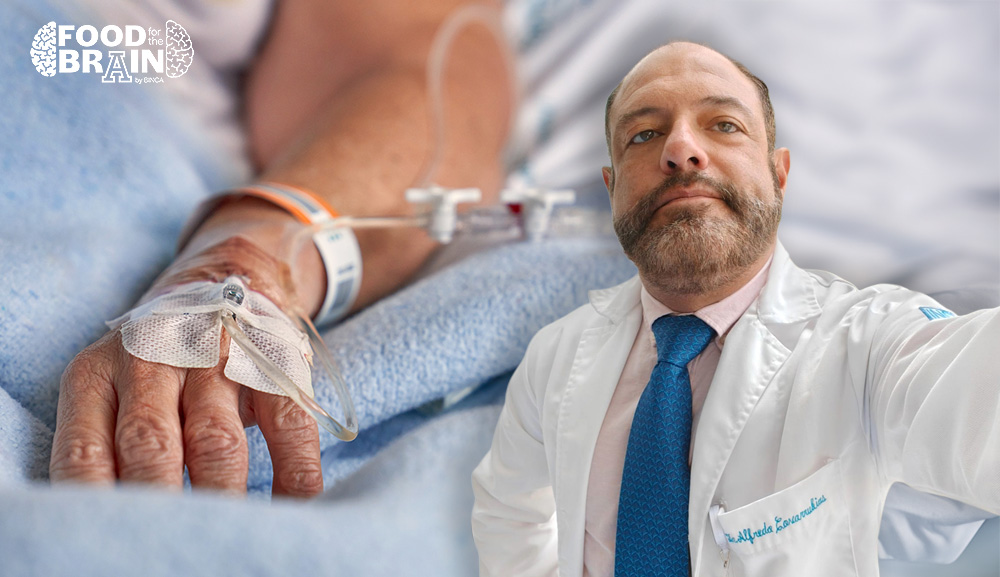
Dr. Alfredo Covarrubias Gómez explained the specific indications for palliative sedation in refractory emergencies, highlighting its essential difference from euthanasia.
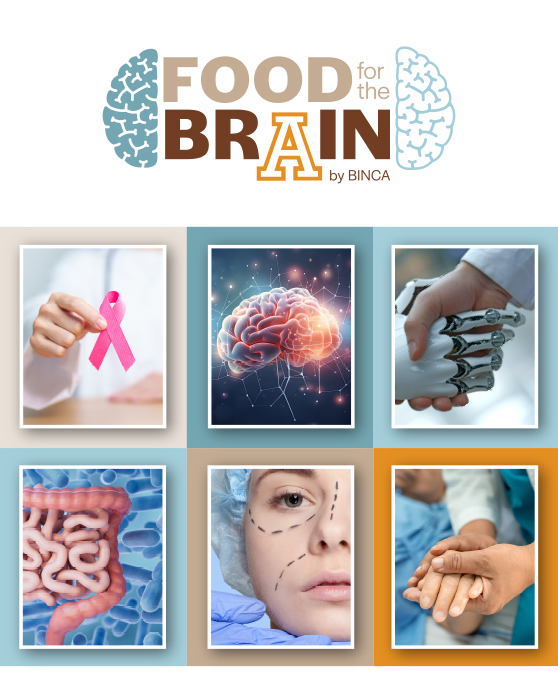
In the latest edition of Food for the Brain, organized by BINCA, we had the valuable participation of Dr. Alfredo Covarrubias Gómez, who joined us while simultaneously presenting at the ALGIA Congress, thereby enriching our academic forum with a current and highly specialized perspective.
The central topic was end-of-life sedation, a concept that, as Dr. Covarrubias emphasized, is frequently and mistakenly confused with practices such as euthanasia or other medical acts that pursue different objectives. From a rigorous clinical and bioethical standpoint, the speaker explained that palliative sedation is a medical intervention indicated exclusively in the presence of five end-of-life emergencies:
- Suffocation crisis
- Massive hemorrhage
- Refractory status epilepticus
- Refractory agitation
- Refractory existential suffering
He underscored that this is a proportional measure aimed at relieving suffering when symptoms are refractory to other treatments, and not an action intended to hasten death. Therapeutic intention, a central element in medical ethics, constitutes a fundamental distinction.
During the session, Dr. Covarrubias presented various clinical scenarios in which this measure is appropriate, as well as others in which it is not, emphasizing the need for prudent, interdisciplinary, and patient-centered clinical judgment. From a bioethical standpoint, the discussion addressed principles such as:
- Autonomy: through respect for advance directives.
- Beneficence and non-maleficence: ensuring proportionality of the intervention and the intention to relieve suffering without causing undue harm.
- The principle of double effect: which provides an ethical framework for understanding how an action aimed at relieving suffering may have foreseeable secondary effects — such as decreased consciousness or even the indirect shortening of life — provided that the primary intention remains palliative and not the causation of death.
The session also reflected on the role of palliative care as a comprehensive model that accompanies, sustains, and humanizes the dying process, avoiding both therapeutic abandonment and medical overreach. In this context, palliative sedation was presented as an exceptional resource, ethically delimited and clinically grounded.
The event concluded with a rich dialogue between the speaker and participants, both in person and via Zoom. The panel’s questions highlighted the complexity of distinguishing intention, proportionality, and therapeutic limits, leaving open a discussion that challenges not only medical practice but also the ethical conscience of our society.
BINCA
More information:
Bioética Clínica y Neuroética Anáhuac (BINCA)
Dra. María Fernanda Martínez Palomo
neuroetica@anahuac.mx