January 5, 2026
Author: Carlo De La Llata Gómez
Versión en español
The daily experience in large cities today is characterized by intense dynamics: busy schedules, multiple constant stimuli, ever-increasing work and social demands, as well as technology that redefines the way we communicate, work, and live. While these changes have made many aspects of life easier and opened up new possibilities, they have also increased people's emotional and mental toll. This context raises relevant questions about psychological well-being and the role that psychiatry plays in an increasingly demanding environment.
In this panorama, psychiatry is in a moment of reflection and transformation. Traditional treatments have been instrumental in improving the lives of millions of people; however, they do not always manage to completely resolve the discomfort, and in many cases the symptoms persist or reappear over time. Faced with this reality, there is a growing interest in understanding how the brain can adapt, change and strengthen, making this capacity a key element for both current therapeutic strategies and those that will be developed in the future.(1,2) .
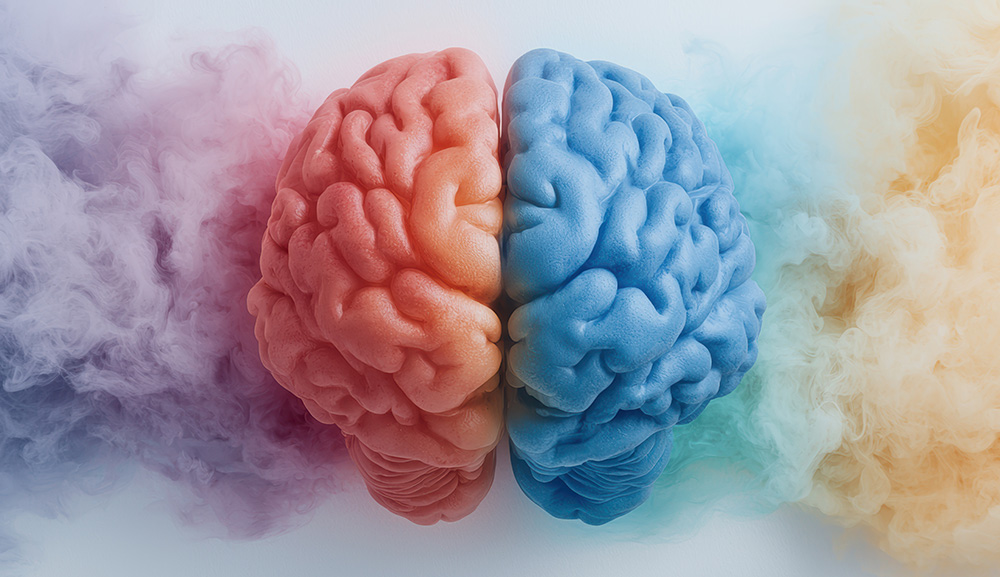
That is why we will talk today about neuroplasticity, which is the ability of the brain and nervous system to reorganize, create new connections and even generate new neurons in adult life. If the brain can change like this, the question arises: can we design interventions that "teach" the brain to get out of the diseased circuits that maintain obsession, depression, or severe anxiety? (1,3).
Recent studies set out precisely this: to compare the effectiveness of treatments that promote neuroplasticity such as deep brain stimulation (DBS), repetitive transcranial magnetic stimulation (rTMS) and D-cycloserine (DCS) against conventional treatments in different psychiatric pathologies, paying special attention to symptoms, functionality and the chances of remission. (4,5). Beyond the numbers, this opens up a fundamental bioethical question: are we facing a new generation of mental health treatments?(6)
Neuroplasticity: A Brain That Can Adapt
As we mentioned, neuroplasticity refers to the brain's ability to adapt throughout life to new experiences, learning or even situations of harm. This adaptation occurs both at the level of brain functioning and its internal organization, which allows the nervous system to continuously adjust to the circumstances it faces. (1,3)
Functionally, these changes occur in the connections between neurons, known as synapses. Some adjustments are immediate and short-lived, related to the way the brain regulates its chemical messengers to respond to stimuli from the environment. Other changes, on the other hand, are consolidated over time, leaving a more lasting mark that influences the way information is processed and retained. (1,7).
From a more structural perspective, neuroplasticity involves physical transformations in the brain. These include the creation of new connections between neurons, the strengthening of existing circuits – as happens when a skill is practiced repeatedly – and, in certain regions of the adult brain, the emergence of new neurons that can be integrated into these networks. Thanks to these processes, the brain can learn, compensate for difficulties and develop more adaptive responses to its environment.
A clear example is observed when a person with depression incorporates positive changes, such as physical activity and therapeutic accompaniment. Over time, your brain can reorganize your connections, strengthen circuits related to emotional regulation, and even promote the formation of new neurons in key areas, which translates into a better stress response and greater emotional stability. (1,5)
To understand it simply, the brain is not a rigid and immutable structure, but a dynamic system, similar to a city in constant transformation. Some difficult experiences can impair certain communication pathways, while appropriate interventions, a supportive environment, and effective treatments can reactivate and strengthen those connections. (1,5)
In psychiatry, many disorders such as persistent depression, obsessive-compulsive disorder, or schizophrenia are associated with brain circuits that function in unhealthy ways.
From an ethical and everyday perspective, this knowledge offers an encouraging message: the brain has the capacity to change. This not only opens a door to hope, but also poses a shared responsibility. If the brain can be transformed, it is essential to ask ourselves how, from health systems, professional practice and society in general, we are contributing to caring for and guiding this potential for change.
When current treatments begin to generate synergy with new therapies
Some of the treatments in psychiatry focus mainly on adjusting the balance of neurotransmitters such as serotonin, dopamine, and norepinephrine.(2)
Today, interventions that will reorganize the brain as we understand it are gaining strength: DBS (deep brain stimulation), which modulates parts of the brain involved in emotions and compulsion, or rTMS (transcranial magnetic stimulation), which adjusts the activation of key areas of the cerebral cortex, and DCS (D-cycloserine), which enhances learning during cognitive-behavioral therapy (CBT). (4–6,8)
From clinical bioethics, this forces us to rethink the responsibility of offering patients alternatives proportionate to the level of suffering and risk.
The bioethical question is direct:
With the above, it is important to pose a series of bioethical questions:
How can we prevent these advances from remaining only in a few highly specialized centers?
What fair criteria should we use to decide who has access to expensive technologies such as DBS?
How can we accompany, from the clinic and ethics, the changes in identity, functioning and life projects that appear when the brain is reorganized in such a profound way?
A psychiatry aligned with dignity and justice cannot be limited to "having evidence". It must translate this evidence into public policies, clinical guidelines and financing schemes that make responsible access to these therapies possible.
Three bioethical keys:
Not everything technically possible is morally obligatory, but systematically ignoring an effective option is equally assuming a moral cost.
Neurotechnology cannot only be for people with economic resources who afford these therapies: if a treatment changes lives, it is necessary to discuss how to incorporate it gradually, prioritizing those who benefit the most and with transparent criteria.
Changes in the brain are changes in biography, not only in biology: accompanying in therapy at the brain level implies talking about identity, relationships, work, life projects, not only symptom scales.
How to start generating neuroplasticity that accompanies us day by day and we can see results?
In addition to medical and technological interventions, there are everyday practices that also promote neuroplasticity. Evidence suggests, to give a few clear examples, that regular exercise, mindfulness, yoga, brief moments of conscious breathing can help the brain regulate stress, strengthen neural connections and improve functions such as attention and mood.(2,7). This is not a substitute for treatments, or psychiatric consultation directly.
That is why it is important to understand current psychiatric therapy as a whole: a combination of clinical and therapeutic tools, as well as lifestyle habits that, from our own trenches, we can support recovery and protect mental health with daily, realistic and sustainable actions. It is important to mention that mental health care is vital with or without a pathological condition.(1,2)
Clear examples are:
"A 20–30 minute walk on most days does not 'cure' depression, but it does create a more favorable biological context for therapy and drugs to work better."(7).
"Better sleep is not a luxury: it is part of the brain's 'plasticity care'."(7) .
Conclusion
Neuroplasticity provides a powerful perspective for thinking about psychiatry today: it suggests that, even in complex conditions, there are real margins for modifying deep-seated patterns. This does not mean promising quick solutions, but recognizing that treatment can be aimed not only at "feeling less bad", but also at recovering concrete capacities: sustaining routines, resuming bonds, making decisions with greater clarity and reconstructing personal projects that the condition had been limiting.
In this framework, innovative interventions can expand the therapeutic repertoire. However, their value does not depend only on the novelty, but on how they are integrated into complete care plans, with well-defined indications, careful evaluation of benefits and risks, and clinical follow-up that is not reduced to procedures, but considers the whole person.
Here the bioethical core appears: to ensure that these alternatives are offered with transparent criteria and that access is not determined by economic capacity, geographical location or availability in a few centers. Talking about justice in mental health implies thinking about gradual and responsible mechanisms of incorporation, clear regulations, professional training and follow-up models that protect patient safety and quality of care.
In addition, any treatment that produces significant changes in mental functioning can bring adjustments in daily life: new ways of relating, facing responsibilities or reinterpreting past experiences. For this reason, care cannot be limited to clinical indicators; it requires spaces of accompaniment that help to integrate changes in a stable and meaningful way, with respect for the values, goals and context of each person.
On the whole, this vision invites a more comprehensive psychiatry: scientific, yes, but also prudent, close and humane. If the brain retains the capacity for transformation, the bioethical challenge is to turn that possibility into quality care, with informed decisions, protection against inequalities and a real commitment to the well-being and dignity of those who live with mental suffering.
Bibliography
- Cramer SC, Sur M, Dobkin BH, O'Brien C, Sanger TD, Trojanowski JQ, et al. Harnessing neuroplasticity for clinical applications. Brain. June 1, 2011; 134(6):1591-609.
- Shaffer J. Neuroplasticity and Clinical Practice: Building Brain Power for Health. Front Psychol [Internet]. 26 July 2016 [cited 11 December 2025];7. Available in: http://journal.frontiersin.org/Article/10.3389/fpsyg.2016.01118/abstract
- Dan B. Neuroscience underlying rehabilitation: what is neuroplasticity? Dev Med Child Neurol. November 2019; 61(11):1240-1240.
- Kinney KR, Hanlon CA. Changing Cerebral Blood Flow, Glucose Metabolism, and Dopamine Binding Through Transcranial Magnetic Stimulation: A Systematic Review of Transcranial Magnetic Stimulation-Positron Emission Tomography Literature. Pharmacol Rev. October 2022; 74(4):918-32.
- Cole J, Selby B, Ismail Z, McGirr A. D-cycloserine normalizes long-term motor plasticity after transcranial magnetic intermittent theta-burst stimulation in major depressive disorder. Clin Neurophysiol. August 2021; 132(8):1770-6.
- Kumar J, Patel T, Sugandh F, Dev J, Kumar U, Adeeb M, et al. Innovative Approaches and Therapies to Enhance Neuroplasticity and Promote Recovery in Patients with Neurological Disorders: A Narrative Review. Cureus [Internet]. 15 July 2023 [cited 11 December 2025]; Available in: https://www.cureus.com/articles/171480-innovative-approaches-and-therapies-to-enhance-neuroplasticity-and-promote-recovery-in-patients-with-neurological-disorders-a-narrative-review
- Pickersgill JW, Turco CV, Ramdeo K, Rehsi RS, Foglia SD, Nelson AJ. The Combined Influences of Exercise, Diet and Sleep on Neuroplasticity. Front Psychol. 2022 Apr 26;13:831819.
- Ashkan K, Rogers P, Bergman H, Ughratdar I. Insights into the mechanisms of deep brain stimulation. Nat Rev Neurol. September 2017; 13(9):548-54.
Carlo De La Llata Gómez. Graduated in Medicine from the Universidad Anáhuac México Campus Norte (2019-2025), he stands out for his experience, student leadership and teamwork. He has been Secretary of the Student Association of Psychiatry and has completed his undergraduate internship at the Angeles Querétaro Hospital. She possesses skills in emotional intelligence, empathy and critical thinking, as well as speaking English (level C1) and German (level B1). Their personal profile emphasizes creativity, responsibility and adaptability. He has experience in project organization and a close, humane and comprehensive treatment. He currently works as a project coordinator at CADEBI.
The opinions expressed in this text are the sole responsibility of the author and do not necessarily represent the official position of Universidad Anáhuac México or the Anahuac Center for Strategic Development in Bioethics (CADEBI). CADEBI promotes plural, informed and respectful academic dialogue on the ethical challenges of mental health and neurosciences.
More information:
Centro Anáhuac de Desarrollo Estratégico en Bioética (CADEBI)
Dr. Alejandro Sánchez Guerrero
alejandro.sanchezg@anahuac.mx