October 7, 2026
Artículo de reflexión: Karla Ruiz
Versión en Español
Introduction
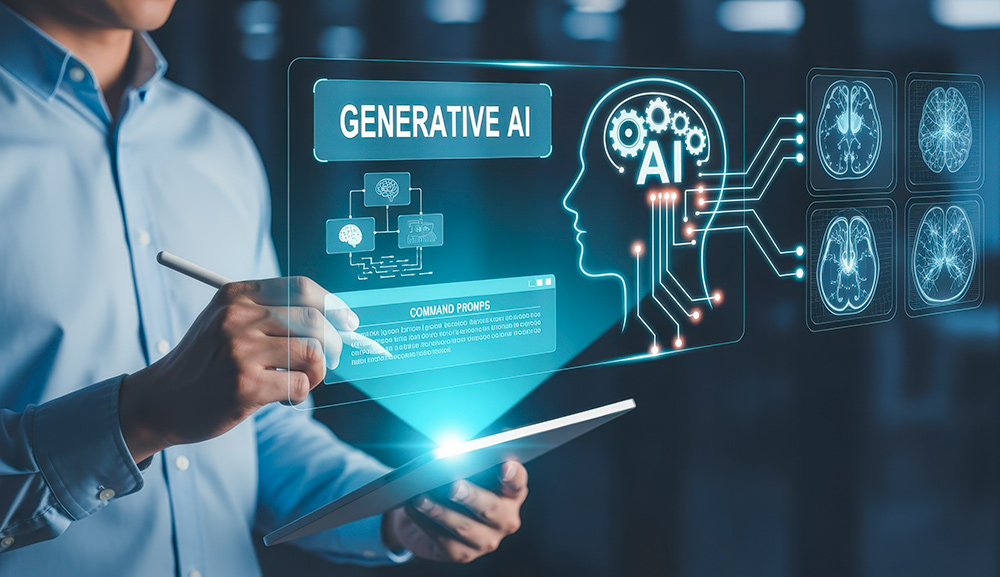
Generative Artificial Intelligence (GenAI) has arrived to transform writing, search, analysis, and calculation activities, but the problem is more complex: it forces us to reconsider which cognitive processes we will continue to use and which we will be willing to delegate.
What, then, can a detector tell us about that process, and what information does it leave out?
Development
1. The problem of detection
Turnitin and AI-generated text identifiers do not make it possible to know how a piece of work was produced. Their function is different: based on linguistic regularities, they estimate the probability that a fragment resembles the outputs of certain models. Weber-Wulff et al. (2023) found accuracy problems across different detection tools, and Atamhenwan (2026) observed variations in Turnitin scores when human-written and generated texts were combined or when content was reformulated. From the field of academic integrity, these limitations require a distinction between detecting patterns and reconstructing a process of authorship. At the outset, it can be stated that a percentage does not reveal what decisions a person made, which sources they verified, which parts they modified, or what responsibility they assumed for the final result.
Transparency answers a different question. When a tool intervenes in writing, search, analysis, code, or interpretation, what matters is knowing what task it performed, the scope of its participation, how its output was verified, and who made the final decisions. The Manual para citar, documentar y transparentar el uso de Inteligencia Artificial Generativa conforme a APA 7.ª edición organizes this information through the principle of proportional transparency: the information made available should correspond to the actual influence of GenAI on the content, method, analysis, or interpretation (Ruiz Mendoza, 2026). From this perspective, declaring the use of a tool does not constitute an admission of wrongdoing; it makes the procedure followed visible.
The same distinction can be applied across different fields. In medicine, summarizing a medical record is not equivalent to suggesting a clinical interpretation; in law, organizing case law is not the same as formulating an argument; in journalism, synthesizing documents differs from generating an image; in engineering, debugging code is not equivalent to proposing design parameters. The tasks change, and with them so does the degree of information that should be preserved. In every case, however, the central question remains: what did the tool do, what did the person do, and how can that relationship be verified? If detection does not reconstruct authorship, what changes when GenAI participates in operations that we previously attributed almost exclusively to the researcher?
2. Reframing the epistemological question a
Floridi (2023) uses the term agency without intelligence to describe the capacity of certain systems to produce effective actions and results without understanding them in the human sense. The distinction is useful for analyzing GenAI because it allows us to recognize that a model may propose a hypothesis, generate code, reorganize information, or produce a strategy without thereby becoming a responsible subject. The tool intervenes in the process; responsibility remains with the people who decide whether to use, verify, modify, or discard its outputs.
Floridi's philosophy of information (2011, 2014) broadens this problem. Knowledge production takes place within an infosphere in which people, data, devices, and computational processes interact. In research, this relationship can be observed when a person formulates the problem, a database provides the data, a model proposes relationships, a program performs calculations, a formal system checks certain steps, and a specialized community evaluates the result. Knowledge does not cease to be human because it incorporates computational processes, but the distribution of the operations through which it is constructed and validated does change.
Humphreys (2004) called epistemic opacity a condition found in computational science: there are computational processes whose entirety cannot, in practice, be inspected by a single person, even though their results can be subjected to validation procedures. With GenAI, this condition expands. It is no longer only calculation that can be delegated; operations related to language, code, hypothesis formulation, or strategy generation can also be delegated. Scientific responsibility, therefore, cannot rest on the idea that the researcher performed every operation personally. It must be grounded in the ability to justify the procedure, preserve relevant evidence, verify sources, and acknowledge which operations were delegated.
Using the word paradigm in a broad sense, it may be said that research practices are changing. The change does not consist merely in replacing one tool with another, but in redistributing activities that were previously attributed almost exclusively to the researcher: search, synthesis, programming, hypothesis exploration, formalization, and review. This requires reconsidering what it means to know a result, what level of understanding is required to accept it, what evidence should be preserved, and how responsibility is distributed when systems capable of producing operations that no person directly performed are involved. What happens when this redistribution reaches a problem whose validity depends on proof, formalization, and collective examination?
3. Navier-Stokes and the new conditions of research
The Navier-Stokes existence and regularity problem makes it possible to observe this transformation in an extreme case. On September 8, 2026, OpenAI presented a solution produced by an internal system and accompanied by a formalization in Lean (OpenAI, 2026b). Three days later, the Clay Mathematics Institute stated that the problem apparently had been solved and reiterated that the evaluation procedure for a result of this nature is deliberately slow (Clay Mathematics Institute, 2026). In this case, producing a proof, formalizing it, reviewing it, and recognizing it as mathematical knowledge are related operations, but they are not equivalent.
The epistemological interest of the example does not depend on whether the solution ultimately receives the prize. A system capable of exploring strategies, coordinating operations, and producing a formal proof changes the conditions under which mathematical research can be conducted. The researcher no longer necessarily performs every step of the procedure; nevertheless, reviewing the assumptions, examining the inferences, understanding the scope, and securing acceptance by the disciplinary community remain necessary. From this perspective, expanding computational and generative capacity does not eliminate standards of justification; it requires making them more explicit. If producing a result is not yet equivalent to turning it into accepted knowledge, what must remain visible from the process so that it can be examined?
4. Transparency and responsibility
Traceability is a condition for keeping knowledge produced with GenAI support open to examination. Documenting an intervention does not require publishing complete conversations or preserving irrelevant information. It requires identifying the tool, the task performed, the scope of its participation, the verification procedures, and the person responsible for the final decisions. Ruiz Mendoza (2026) distinguishes four pathways that may be combined according to the use: describing the intervention in the method when it modified the research procedure; citing an output when it is reproduced, paraphrased, or analyzed; declaring its participation when it materially affected the preparation of the work; and preserving additional evidence when evaluation, auditability, or reproducibility requires it.
Authorship becomes more demanding under this distribution of work because it can no longer be confused with the material execution of every word, calculation, or line of code. GenAI may propose a formulation; the author decides whether to accept it and must be able to answer for it. It may suggest references; the original sources must be consulted. It may generate code; its functioning and correspondence with the data must be verified. It may synthesize results; the researcher must determine whether that synthesis adequately represents the evidence. Given the problem outlined here, replacing this documentation with a detection percentage reduces an epistemological problem to a technical classification. Detection may form part of an institutional procedure, but it does not demonstrate who wrote an idea, how an inference was constructed, or whether a source was verified. Transparency, by contrast, makes it possible to examine the distribution of work between person and system. What, then, does conducting research with GenAI require if standards of evidence, justification, and responsibility are to be preserved?
Conclusions
Turnitin and AI-generated text identifiers do not solve the problem of academic integrity because they answer a limited question: whether a fragment resembles, in certain linguistic features, the outputs of a model. That estimate does not reconstruct authorship decisions, verify sources, or reveal which part of the work was delegated. For this reason, a percentage may serve as a signal within an institutional procedure, but it should not become the principal evidence used to determine how a text was produced.
At the same time, the incorporation of GenAI changes some of the conditions under which knowledge is produced. Floridi makes it possible to distinguish between agency and responsibility; Humphreys shows that epistemic opacity predates generative models and is part of a science supported by computational processes that cannot always be inspected in their entirety. The Navier-Stokes case makes an additional problem visible: generating a proposal, formalizing it, verifying it, and accepting it as knowledge are distinct operations. The expansion of system capabilities does not eliminate human and community validation; it requires specifying where that validation occurs and what evidence supports it.
From this perspective, speaking of a paradigm shift does not mean abandoning standards of truth, evidence, or justification. It means revisiting how those standards are satisfied when part of the epistemic work is distributed between people and systems. Transparency makes it possible to document that distribution without treating the use of GenAI as misconduct or presenting the tool as an author. The greater the intervention in the content, method, analysis, or interpretation, the greater the possibility should be of reconstructing the procedure and the human decisions that led to the result.
To put this principle into practice, consultation of the Manual para citar, documentar y transparentar el uso de Inteligencia Artificial Generativa conforme a APA 7.ª edición (Ruiz Mendoza, 2026) is recommended. The proposal of proportional transparency and the pathway based on tool, task, scope, verification, and responsibility offer a criterion applicable across different fields. In the face of automated surveillance, the alternative is not to trust without reviewing; it is to document better so that the process can be understood, discussed, and, when necessary, audited.
GenAI Use Statement
ChatGPT (GPT-5.6 Sol; OpenAI, 2026a) was used in the preparation and review of this article to support the structuring and rewriting of the draft, the reorganization of paragraphs, and the review of syntax, cohesion, and clarity. The tool was also used to cross-check the consistency of certain references and formulations. The cited sources were verified against their available originals; conceptual selection, interpretation, editorial decisions, and the final version remain the responsibility of the author.
Conflict of Interest
The author reports that she is also the author of the Manual para citar, documentar y transparentar el uso de IAGen conforme a APA 7.ª edición, which is recommended and cited in this article. This relationship is disclosed in the interest of transparency.
References
- Atamhenwan, L. E. (2026). How are combinations of human-written words and LLM-generated words by ChatGPT, Copilot, Gemini and Grammarly detected by Turnitin? Education and Information Technologies. https://doi.org/10.1007/s10639-026-14049-2
- Clay Mathematics Institute. (2026, 11 de septiembre). Navier-Stokes announcement. https://www.claymath.org/news/navier-stokes-announcement/
- Floridi, L. (2011). The philosophy of information. Oxford University Press. https://doi.org/10.1093/acprof:oso/9780199232383.001.0001
- Floridi, L. (2014). The fourth revolution: How the infosphere is reshaping human reality. Oxford University Press.
- Floridi, L. (2023). AI as agency without intelligence: On ChatGPT, large language models, and other generative models. Philosophy & Technology, 36, Article 15. https://doi.org/10.1007/s13347-023-00621-y
- Humphreys, P. (2004). Extending ourselves: Computational science, empiricism, and scientific method. Oxford University Press. https://doi.org/10.1093/0195158709.001.0001
- OpenAI. (2026a). ChatGPT [Modelo de lenguaje de gran tamaño]. https://chatgpt.com/
- OpenAI. (2026b, 8 de septiembre). On the Navier-Stokes Millennium Prize Problem. https://openai.com/index/navier-stokes-solution/
- Ruiz Mendoza, K. K. (2026). Manual para citar, documentar y transparentar el uso de Inteligencia Artificial Generativa (IAGen) conforme a APA 7.ª edición. Aglafía: Revista Interdisciplinaria de Educación, Tecnología, Ciencias Sociales y Humanidades, 1(2), 6-38. https://doi.org/10.66769/agla.36
- Weber-Wulff, D., Anohina-Naumeca, A., Bjelobaba, S., Foltýnek, T., Guerrero-Dib, J., Popoola, O., Šigut, P., & Waddington, L. (2023). Testing of detection tools for AI-generated text. International Journal for Educational Integrity, 19, Article 26. https://doi.org/10.1007/s40979-023-00146-z
Karla Ruiz PhD in Educational Sciences from the Universidad Autónoma de Baja California, with master's degrees in History and in Social Networks and Technology, and bachelor's degrees in Language and Literature Teaching and in Computer Systems. University professor and academic editor of Aglafía: Revista Interdisciplinaria de Educación, Tecnología, Ciencias Sociales y Humanidades; she is also a researcher in education, assessment, and generative artificial intelligence. Her recent work focuses on transparency and academic integrity, critical AI literacy, educational measurement, and methodologies for the responsible use of GenAI in teaching, research, and scientific publishing.
The opinions expressed in this blog are the sole responsibility of their authors and do not necessarily represent the official position of CADEBI. As an institution committed to inclusion and plural dialogue, at CADEBI we promote and disseminate a diversity of voices and approaches, convinced that respectful and critical exchange enriches our academic and educational work. We value and encourage all comments, responses, or constructive criticism that readers may wish to share.
More information:
Centro Anáhuac de Desarrollo Estratégico en Bioética (CADEBI)
Dr. Alejandro Sánchez Guerrero
alejandro.sanchezg@anahuac.mx