
February 16, 2026
Author: Juan Manuel Palomares Cantero
Versión en español
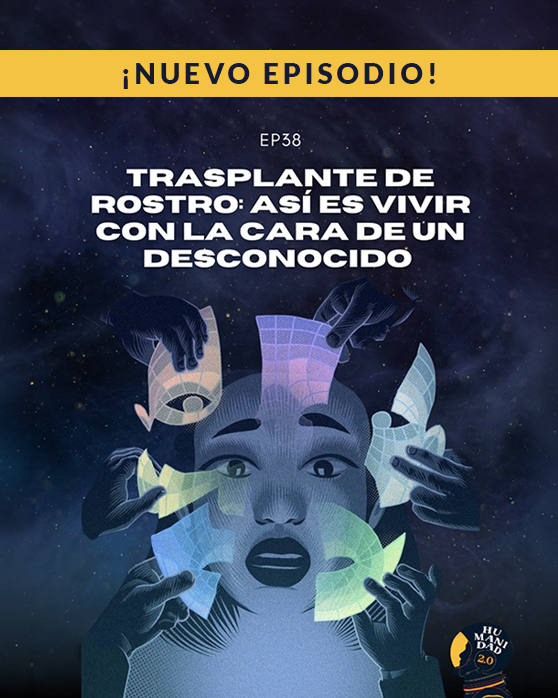
What does it mean to receive a new face? What does it entail to breathe again, to speak, and to present oneself to the world thanks to the face of a person who decided to end their life through euthanasia? These questions take on particular weight in light of the recent facial transplant performed at Vall d’Hebron Hospital1. This is not the first face transplant—a technique with well-established clinical precedents—but it is the first performed using tissue from a donor who, before dying, underwent euthanasia and expressed in advance her wish to donate her face.
The news has been celebrated as evidence of medical progress and of medicine’s capacity to transform an extreme situation into hope for another person. The emphasis is often placed on the success of the surgery and the significant improvement in the recipient’s quality of life. However, this case introduces a dimension that cannot go unnoticed: the reconstruction of one life becomes possible through the body of another person whose death occurred not solely through the course of an illness, but within the framework of a legally permitted and freely assumed medical decision.
In this event, three realities intertwine and require attention: euthanasia, organ donation, and facial transplantation. Each one, taken separately, raises relevant questions; considered together, they invite reflection on the meaning of medical care, the limits of clinical intervention, and the way a society responds to human suffering. Precisely because of its exceptional nature, the case calls for a perspective that goes beyond technical enthusiasm and the narrative of success, opening a space for calm and responsible ethical reflection.
The Therapeutic Value of Facial Transplantation and the Dignity of the Recipient
Any responsible ethical reflection must begin by recognizing the concrete good that this kind of intervention represents for the person who receives the transplant. A facial transplant is not cosmetic surgery nor a procedure aimed at appearance, but a complex reconstructive intervention that seeks to restore basic functions such as breathing, eating, speaking, and relating to others. In this sense, it is a form of medicine aimed at repairing profound damage and helping the person recover, as far as possible, a fuller and more functional everyday life2. From this perspective, the recipient occupies a central place.
Their dignity does not depend on the technical success of the surgery nor on the public impact of the case, but on their condition as a bodily, vulnerable, and relational human being. The face is not merely a part of the body, but an element deeply tied to personal identity, communication, and one’s presence before others. Therefore, when the transplant is oriented toward the patient’s integral good and carried out with respect for the person, it can be viewed positively from an ethical standpoint3.
Recognizing this therapeutic value also means recognizing the generosity of the person who decides to donate. This acknowledgment allows us to highlight the good achieved, without yet exhausting the questions that arise when donation occurs in particularly delicate contexts.
Euthanasia as an Ethical Turning Point
While facial transplantation allows us to recognize a clear therapeutic good, the element that makes this case especially complex is the donor’s euthanasia. This is not a secondary detail nor merely a prior medical condition, but a decision that significantly alters the ethical framework from which the entire process is understood. Euthanasia is not a neutral fact, because it introduces a different way of understanding the medical act and the relationship between medicine, life, and death4.
From a person-centered perspective, there is a relevant difference between dying as a consequence of the progression of an illness and dying as the result of a deliberate medical intervention. This distinction is not intended to judge the personal experience of the one who makes the decision, but to point out that the role of medicine changes. When death is directly caused, medical practice ceases to be oriented solely toward care, relief of suffering, or accompaniment, and takes on an active role at the moment of death5.
In this context, it is worth being cautious with narratives that present euthanasia solely as an act of generosity or as a positive legacy. Without denying the donor’s intention of solidarity, such narratives can shift attention away from the gravity of the decision toward its favorable consequences, making a more serene ethical reflection more difficult. As Habermas warns6, when technology expands what is possible, it also demands a more attentive review of the limits of what is ethically acceptable.
Organ Donation After Euthanasia
Given the novelty of this case, ethical discussion about donating a face after euthanasia is only just beginning. Even so, it is foreseeable that informed consent will be invoked as the main justification. From an ethic sensitive to vulnerability, consent is not understood as an isolated “yes,” but as something bound to the context in which it is given: pain, exhaustion, dependence, fear, and the quality of the support received7. It also matters that death is scheduled. Planning the procedure, the expectation of helping others, and the social recognition associated with donation can generate indirect pressure, even if no one intends to influence the person. In such scenarios, distinguishing between a free choice and a conditioned choice can become difficult8. Lastly, it is worth remembering that the body is not a set of available parts, but a dimension of personal identity. Respecting the body, even after death, expresses respect for the life that inhabited it9. Therefore, when donation occurs after an induced death, care is required so as not to erase the ethical difference between donating after dying and dying within a framework where donation weighs decisively.
Algophobia, Pain, and Compassionate Discourse
In many contemporary arguments in favor of euthanasia, pain occupies a central place. However, as Eric Cassell10 has noted, physical pain does not exhaust the experience of human suffering. Reducing suffering solely to bodily pain entails confusing different realities such as physical discomfort, hopelessness, loneliness, or therapeutic abandonment, which leads to ethically oversimplified responses.
The insistence on pain as the decisive argument often obscures other relevant deficiencies, such as insufficient palliative care, lack of accompaniment, or weakness of family and social networks at the end of life11. In this context, one can speak of a social algophobia: a cultural difficulty in accepting and accompanying suffering, which favors quick solutions aimed at eliminating suffering by eliminating the one who suffers, rather than strengthening care.
As Ivan Illich warned12, the extreme medicalization of suffering tends to shift relational and social responsibility toward technical responses. From this logic, euthanasia can be presented not as the failure of care, but as its culmination, profoundly altering the meaning of medical compassion.
A Biojuridical Reading and the Primacy of Care
From a legal standpoint, these debates unfold within legal frameworks that permit euthanasia under certain conditions. Nevertheless, the fact that a practice is legal does not automatically mean that it is justified from an ethical perspective. Law and ethics do not oppose each other, but neither are they the same: a valid norm can be questioned in terms of justice and meaning13.
When law limits itself to regulating procedures without revisiting the principles that sustain them, it runs the risk of weakening its protective function, especially when criteria are relaxed and conditions expanded14. Against this, a person-centered biojuridical approach reminds us that human life cannot be reduced solely to individual autonomy. True medical progress is not measured only by technical efficacy, but by its capacity to care without losing sight of the person’s dignity and the ethical responsibility that accompanies all technical power15.
Between Technical Admiration and Moral Responsibility
The facial transplant performed using a donor who chose euthanasia offers a valuable opportunity to reflect on the role of medicine in extreme situations. Recognizing the concrete benefit this intervention can represent for the recipient does not exclude—rather, it requires—carefully evaluating the manner in which that benefit is achieved.
Beyond the particular case, this analysis invites the formation of an ethical criterion capable of distinguishing between what is technically possible and what is humanly appropriate. Bioethics does not seek to halt scientific development, but to help us understand what kind of medicine we want to build and what values should guide its decisions. For those currently training in different disciplines, this exercise is especially relevant, as it helps cultivate a critical perspective toward medical advances.
When ethical reflection accompanies technique, medicine can advance without losing its vocation of care. Thinking through these cases seriously is part of the professional responsibility of those who will participate in decisions that affect people’s lives, health, and dignity.
Juan Manuel Palomares Cantero holds a law degree, and a master’s and doctorate in Bioethics from Universidad Anáhuac México. He has served as Director of Human Capital, as well as director and general coordinator in the Faculty of Bioethics. He currently works as a researcher in the Academic Directorate of Integral Formation at the same university, where he promotes projects on professional ethics, open reason, and integral formation. He is a member of the Mexican National Academy of Bioethics, the Latin American and Caribbean Federation of Bioethics Institutions (FELAIBE), and the National System of Researchers. His work combines philosophical reflection with educational action, promoting a humanistic vision of bioethics at the service of the person and the common good. This article was assisted in its drafting by the use of ChatGPT, an artificial intelligence tool developed by OpenAI.
The opinions expressed in this blog are the exclusive responsibility of their authors and do not necessarily represent the official position of CADEBI. As an institution committed to inclusion and plural dialogue, at CADEBI we promote and disseminate a diversity of voices and approaches, with the conviction that respectful and critical exchange enriches our academic and formative work. We value and encourage any comments, responses, or constructive critiques you may wish to share.
- Vall d’Hebron University Hospital, in Barcelona (Spain), reported on February 2, 2026, the performance of the world’s first partial face transplant using a donor who had undergone euthanasia, in accordance with the current Spanish legislation. The procedure was carried out by its Plastic Surgery and Burns team and was shared by Biotech Spain and through the hospital’s official channels. The donor, who had been authorized to receive the Aid in Dying benefit (PRAM), also decided to donate organs, tissues, and her face. The recipient required a Type I facial transplant after severe necrosis of the facial tissues caused by a bacterial infection. The intervention involved close to a hundred professionals and followed the clinical, technical, and ethical protocols established for donation and transplantation in Spain. Biotech Spain. (2026, February 2). Vall d’Hebron realiza el primer trasplante de cara del mundo con una donante que recibió la eutanasia. https://biotech-spain.com/es/articles/vall-d-hebron-realiza-el-primer-trasplante-de-cara-del-mundo-con-una-donante-que-recibi-la-eutanasia/
- Truog, R. D., & Miller, F. G. (2008). The dead donor rule and organ transplantation. The New England journal of medicine, 359(7), 674–675. https://doi.org/10.1056/NEJMp0804474
- Mora-Martín, R. M. (2019). Persona y acción, clave de bóveda de la antropología de Karol Wojtyła / Juan Pablo II. Cuadernos de Pensamiento, 32, 53–82. https://doi.org/10.51743/cpe.52
- Pascual, F. (2025). La bioética de Elio Sgreccia. Alpha Omega, 28, 207–242. https://riviste.upra.org/index.php/ao/article/view/4499/3363
- Kass, L. R. (2002). Life, liberty, and the defense of dignity: The challenge for bioethics. Encounter Books. https://scholarship.law.edu/cgi/viewcontent.cgi?article=1174&context=jchlp
- Heggie, A. (2025). The publics of Hannah Arendt and Jürgen Habermas (Senior honors thesis, University of Louisville). University of Louisville Institutional Repository. https://ir.library.louisville.edu/honors/342
- Jacobsen, D. S., & Donahue-Martens, S. (2025). Race, preaching, and Ricoeur (1st ed.). Fortress Academic. ISBN: 978-1-9787-1695-7
- Alkemade, E. A. J., Lam, H. D., Hendriks, B. J. C., Braat, A. E., Alwayn, I. P. J., Coenraad, M. J., & Baranski, A. G. (2025). Optimizing Organ Donation After Euthanasia: A Critical Appraisal. Transplantology, 6(2), 10. https://doi.org/10.3390/transplantology6020010
- Delaney, J. (2025). Well-being and human enhancement: A natural-law perspective. Christian Bioethics: Non-Ecumenical Studies in Medical Morality, 31(2), 103–111. https://doi.org/10.1093/cb/cbaf003
- Tate, T. (2025). Objective suffering: What is it? What could it be? Cambridge Quarterly of Healthcare Ethics, 1–9. https://doi.org/10.1017/S0963180125000040
- Byock, I. (2013). The best care possible: A physician's quest to transform care through the end of life. Penguin.
- Sharma, A. K. (2025). Health inequalities: The impact of social structure and mobility of risks. Elsevier. https://doi.org/10.1016/B978-0-443-33044-5.00007-3
- Alexy, R., Dalla-Barba, R. G., & Poscher, R. (2025). The Alexy-Poscher debate on legal principles. Hart Publishing. https://digital.casalini.it/9781509980598
- Tollefsen, C. (2026). John Finnis and natural law. In Law and morality (pp. 1–12). Routledge. https://doi.org/10.4324/9781003728603-7
- Jonas, H. (2014). El principio de responsabilidad: Ensayo de una ética para la civilización tecnológica (J. M. Fernández Retenaga, Trad.; A. Sánchez Pascual, Colab.). Herder Editorial. (Obra original publicada en 1979).
More information:
Centro Anáhuac de Desarrollo Estratégico en Bioética (CADEBI)
Dr. Alejandro Sánchez Guerrero
alejandro.sanchezg@anahuac.mx