
Maroun Badr
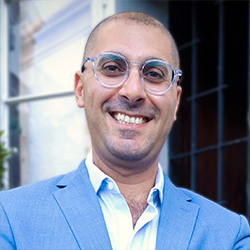
Maroun BADR holds a PhD in bioethics (summa cum laude/with highest honors) from the Faculty of Bioethics at the Ateneo Pontificio Regina Apostolorum (Rome). His thesis is published in French under the title: L’autonomisation de la femme par l’avortement et la contraception dans les Objectifs de Développement Durable de l’ONU (Éd. Les Études Hospitalières/LEH, June 2025) / Women’s Empowerment through Abortion and Contraception in the UN Sustainable Development Goals.
Member of the Scientific Council of the Casablanca Declaration group of experts for the Universal Abolition of Surrogacy, he is a research scholar at the UNESCO Chair in Bioethics and Human Rights - Rome and an associate researcher at the Facultad de Bioética Universidad Anáhuac - México.
Lecturer at the Law faculty of The Université Catholique de l’Ouest (Angers, France), and author of three books, Maroun BADR has already published 14 peer-reviewed original articles in several international journals and regularly participates in regional and international bioethics conferences.
His main areas of interest are bioethics law, biolaw, biopolitics, fundamental rights, UN policy and sexual and reproductive rights, emerging life, women’s and minors’ rights and health, sustainable development and public health, reproductive technologies, end-of-life.
Bioethics for prof. Maroun BADR
Bioethics is not merely a collection of prohibitions, but an essential tool for discernment aimed at protecting life in all its forms. His work operates within a personalist legal paradigm, asserting that the human person possesses an inherent, intangible dignity that serves as the foundational principle for all legal norms.
Maroun Badr argues against a reductionist view of the law that would treat the human body as a fungible commodity or a mere object of contractual autonomy. Instead, he advocates for a holistic legal status of the person, emphasizing that legislative frameworks—particularly those governing assisted reproduction, surrogacy and end-of-life care—must prioritize the protection of the vulnerable over absolute individualistic will.
From a legal-ethical standpoint, Badr suggests that bioethical regulations should not be seen as constraints on scientific progress, but as essential safeguards that uphold the integrity of the person and ensure that technological advancement remains subordinate to the fundamental right to life and human dignity.
His approach seeks a balance between fundamental rights, scientific knowledge, and a heightened responsibility toward the most vulnerable members of society.
For more information:
Dr. Maroun BADR
Associate Researcher
contact@marounbadr.fr
mbadr@unescobiochair.org
www.marounbadr.fr